


Saving Billions of VND through Operational Optimization at the Dung Quat Refinery
-
Author:
 25/12/2025
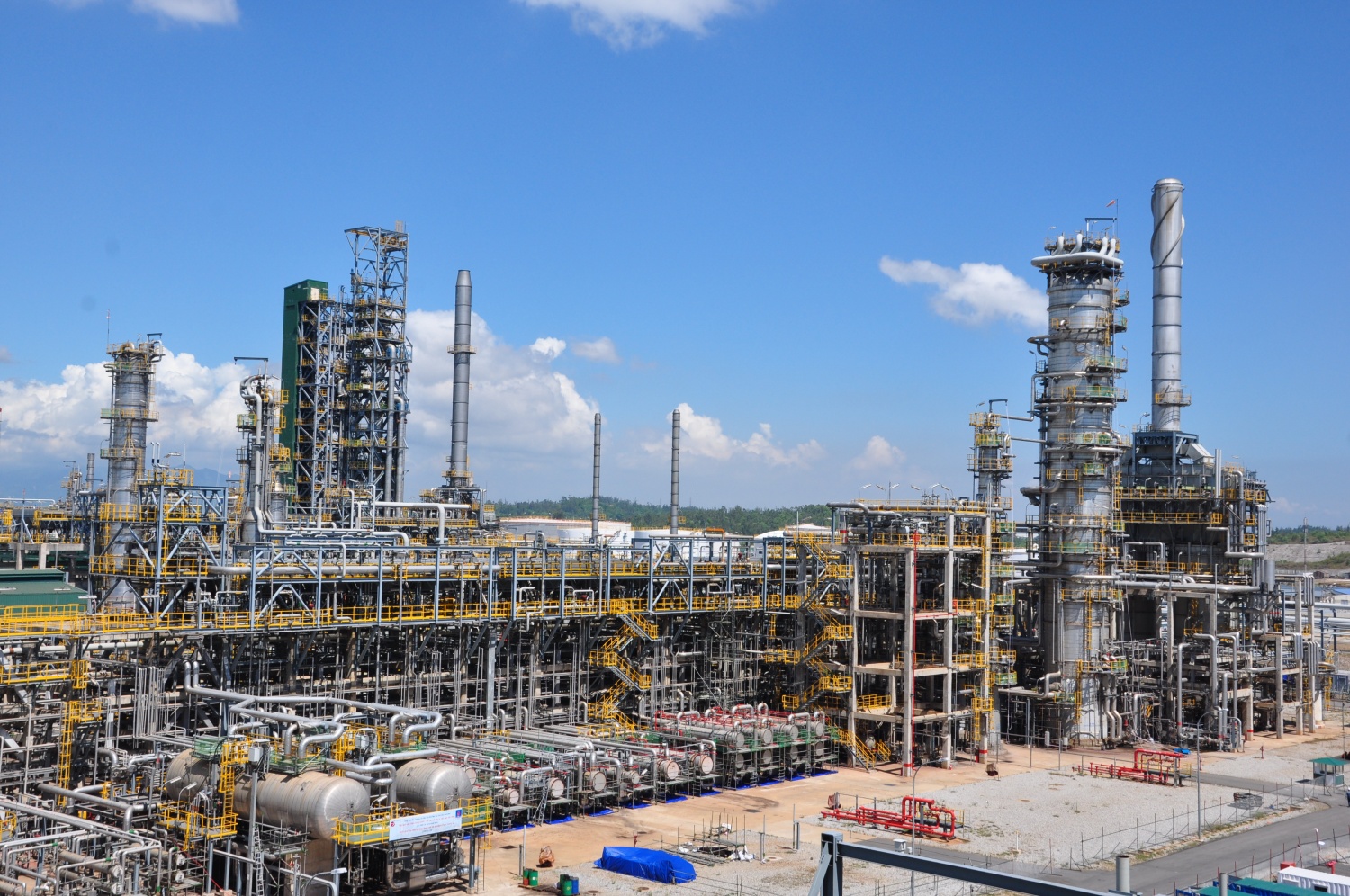
At the Dung Quat Refinery, the LCO-HDT unit is designed to remove sulfur and other impurities from LCO streams originating from the RFCC unit - an indispensable step in the production of commercial-grade diesel. However, Mr. Le Quoc Viet, Deputy Head of the Process Technology Department, Research and Development Division, identified the potential to adjust the operating mode of this unit to significantly reduce energy consumption while maintaining product quality.
A technical turning point
After more than 16 years of commercial operation, the engineering team of Binh Son Refining and Petrochemical Joint Stock Company (BSR) has fully mastered modern refining and petrochemical technologies - from operation and maintenance to process optimization. Among them, Mr. Le Quoc Viet stands out as a typical example, having proposed and implemented the solution entitled “Changing the operating mode of the LCO-HDT unit and optimizing diesel blending to save energy.” This initiative has delivered economic benefits worth billions of VND to the Refinery, further affirming the competence and intellect of BSR engineers.
Joining BSR during the refinery’s commissioning phase, Mr. Viet has held various positions spanning operations and R&D, giving him an in-depth understanding of each process unit’s technological characteristics. Currently, as Deputy Head of the Process Technology Department, he is responsible for evaluating and proposing technical optimization solutions to ensure stable, efficient, and safe refinery operations.
Within the process chain, the LCO-HDT unit is likened to the Refinery’s “purification filter,” playing a critical role in ensuring product quality. The unit uses hydrogen to remove sulfur, nitrogen, and unsaturated hydrocarbons from the LCO fraction (from the RFCC unit) so that it meets specifications for blending into commercial diesel. This process is highly energy-intensive, consuming large amounts of hydrogen, steam, fuel gas, and utilities - factors that account for a major share of production costs.
Drawing on operational experience and practical observation, Mr. Viet realized that during certain periods, when sulfur content in the incoming crude oil is low, the diesel product can still meet specifications without routing LCO through the LCO-HDT unit. This led him to pose a critical question: Under what operating conditions and crude oil characteristics can LCO be directly blended into diesel meeting specifications without processing through the LCO-HDT reactor system?
From there, the research team analyzed years of operating data and developed correlation models linking sulfur content in crude oil, the LCO fraction, diesel products, and the throughput of the Sulfur Recovery Unit (SRU2). This analysis enabled the identification of an “optimal operating window” in which the LCO-HDT reactor system could be bypassed, allowing direct blending of LCO into diesel while still ensuring product quality. This data-driven insight and innovative process management thinking helped transform a seemingly small technical observation into a billion-VND-value initiative for BSR.
Energy savings and environmental protection
Although the potential to maintain product quality without sulfur treatment was identified, the solution faced a complex challenge: determining the optimal sulfur threshold in crude oil. At the same time, impacts on process performance and other diesel properties - such as cetane number, viscosity, and water content—had to be carefully assessed.
To address this challenge, Mr. Viet and his colleagues conducted an extensive research program. They analyzed multi-year operational data, established sulfur distribution balances from crude oil feed through individual process streams to final products, and determined the relationship between crude sulfur content, diesel sulfur content, and SRU2 capacity—thereby identifying an ideal technical threshold. In parallel, the team carried out numerous blending trials and laboratory analyses, and organized dozens of technical workshops to assess risks and propose mitigation measures, ensuring successful implementation of the idea.
The solution required a long and rigorous research process, with identifying the “optimal operating window” being one of the most challenging tasks.
Through multiple pilot runs, daily sampling, and diesel quality analyses, the team confirmed that the product continued to meet specifications when the crude oil sulfur content ranged from 500–700 ppm. This range was defined as the “optimal operating window,” enabling the Refinery to flexibly adjust operating modes, save energy, and still ensure safety and product quality.
The initiative “Changing the operating mode of the LCO-HDT unit and directly blending LCO/HVN into diesel to save energy” has delivered impressive economic and energy efficiency results while contributing to environmental protection. In just two short implementation periods (September 11-25, 2021 and October 3-19, 2022), the Refinery saved nearly VND 7 billion in operating costs. These savings were achieved by temporarily shutting down the reactor system, significantly reducing consumption of hydrogen, steam, electricity, fuel gas, and demineralized water - factors accounting for 60-70% of production costs. Notably, each hour of unit shutdown saves nearly 90% of auxiliary energy consumption, thereby reducing CO₂ and greenhouse gas emissions and contributing to environmental protection. From what appeared to be a minor operational adjustment, the solution has clearly demonstrated BSR engineers’ mastery of technology, innovative spirit, and commitment to sustainable development.
“I feel very happy that this solution not only helps save costs and energy, but also lays the groundwork for deeper operational optimization studies, moving toward BSR’s goals of efficiency, safety, and green development,” Mr. Viet shared.

From a seemingly small adjustment in the operation of the LCO-HDT unit, the initiative of Mr. Le Quoc Viet has demonstrated the power of sharp insight, innovative thinking, and technological ownership within BSR’s workforce. His efforts have been duly recognized: the solution won Third Prize at the 14th Quang Ngai Provincial Technical Innovation Contest and was also nominated to participate in the 18th National Technical Innovation Contest.
Mr. Le Quoc Viet and his solution have provided compelling evidence of BSR’s technological capability and innovative mindset. Beyond delivering economic benefits, the initiative contributes to emissions reduction and the sustainable development goals of the Dung Quat Refinery - affirming the caliber and professionalism of Vietnamese engineers in the modern refining and petrochemical industry.
BSR
Keywords